The first thing Call of War teaches you is that nothing happens quickly. You order a division across a few provinces and it sets off in real time, taking hours rather than seconds. That sounds dull written down. In practice it makes every order feel weighty, because by the time your troops arrive the situation may have changed, and the player next door has had all afternoon to notice them coming.
It comes from the same stable as Supremacy 1914, and you can feel the family resemblance: a large map, a nation to run, an economy that feeds an army and a crowd of other people with their own ambitions. Where Call of War pulls ahead is in its breadth. Land, air and sea all matter, research shapes what you can field, and the Second World War setting gives the decisions a recognisable texture.
Provinces, factories and the quiet arithmetic of war
Your nation is a patchwork of provinces, and each one contributes to an economy that has to keep your forces supplied. Early on, the real game is deciding what to build where. A sensible player spends the opening days strengthening production and claiming nearby land before anyone else does, because an army without an economy behind it runs out of road very quickly. It is closer to a board game than an action title.
Conquered territory does not instantly become useful, either, which means a fast, greedy expansion can leave you overstretched and short of resources. We learned that the hard way in our first round, grabbing a neighbour’s coast and then discovering we could not afford to defend it. The lesson stuck: in Call of War, the ledger is as much a weapon as the tank.
A research tree that makes you commit
Research is where your personality as a commander shows. You cannot chase everything, so you choose a direction and live with it. Spend on armour and you may face a rival who has invested in aircraft; neglect the navy and an island neighbour becomes untouchable. Every choice closes a door, which is exactly what makes the tree interesting rather than a checklist to tick off.
The research choices also tie neatly into diplomacy. Watching what units a neighbour fields tells you what they have studied, and that in turn hints at what they are planning. More than once we changed our own research path after spotting a column of unfamiliar units massing on a border. It is the kind of detective work that makes the game feel alive between battles.
Land, sea and sky on one shared map
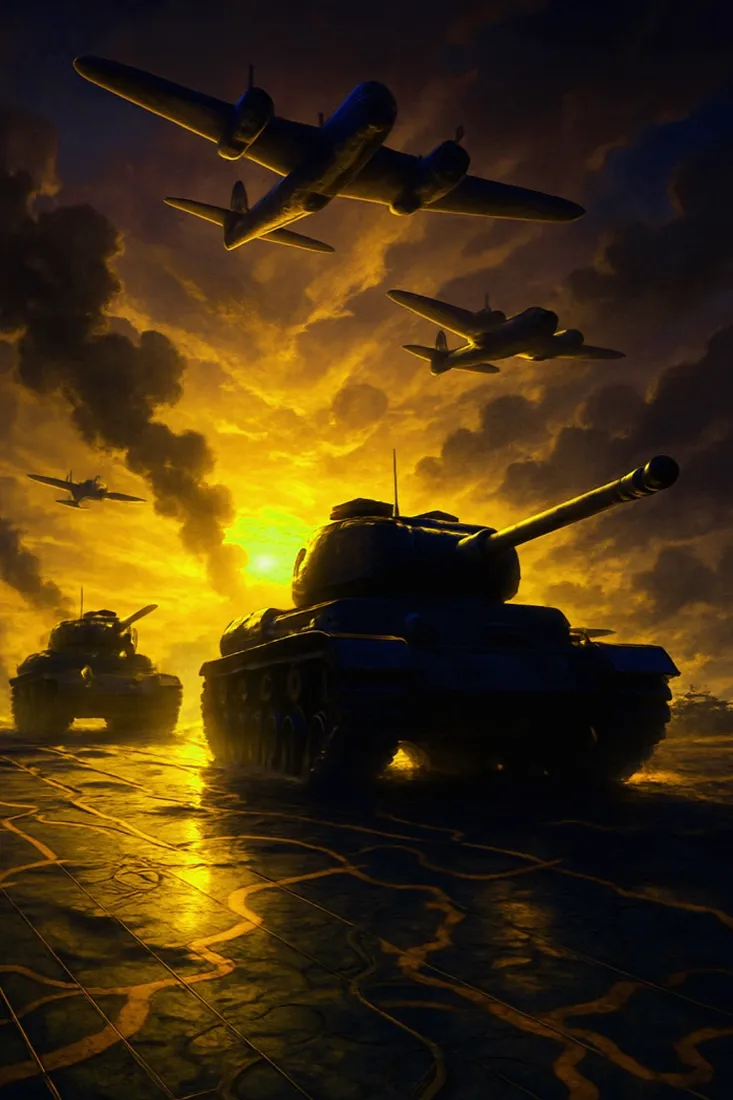
Combined forces are the heart of the fighting. Infantry hold ground, armour punches through, aircraft strike from range and ships control coastlines and crossings. None of them is a complete answer on its own, so a good attack usually mixes several. Because movement happens in real time, timing matters enormously: arriving with your aircraft an hour before your ground troops can turn a clean victory into a costly mess.
The map is persistent and shared, so every front you open is visible to everyone watching. That creates a lovely tension. Committing your strength in the east may tempt a western neighbour to try their luck, and the game constantly asks whether you can afford the attention a new war demands. On a busy British weekday evening, that question often decides whether we press on or sign a ceasefire.
Alliances, betrayals and the free-player question
Alliances in Call of War are practical arrangements rather than permanent families. You coordinate with friends, share intelligence and pick targets together, and a well-organised group can dominate a round. Equally, the map is full of opportunists. The diplomatic game of who to trust, when to commit and when to stay quiet is half the fun, and the chat channels can be as tense as the front lines.
There are optional purchases that speed things along, and on a crowded map you will meet players who use them. In our experience, a free player who checks in regularly, picks good allies and avoids reckless wars can still finish a round well. The boosts help most with impatience; they do not replace judgement. That is why the fairness score is respectable rather than perfect.
Call of War: the opening campaign week
- Spend the opening day strengthening your home provinces and economy before you send a single soldier across a border.
- Read the research tree slowly and pick a clear direction, armour, air or naval, that suits your geography.
- Introduce yourself to every neighbour by message; early friendships are cheaper than early wars and far more useful.
- Plan attacks around travel times, so your different forces arrive together rather than strolling in one after another.
- Join or form an alliance by the end of the week, and agree with them who you are all watching.
What we love
- Real-time movement makes every order feel considered and every arrival dramatic.
- A research tree that forces genuine commitment instead of letting you unlock everything.
- Combined land, air and sea warfare with real reasons to use each arm.
- Diplomacy that matters as much as firepower on a crowded map.
What grates
- Missing a day at the wrong moment can undo a week of careful work.
- The interface takes an evening or two to read comfortably.
- Impatient paying players can be loud on the map, though rarely decisive.
The commander Call of War rewards
Call of War is for the player who likes a war they can think about on the walk to work. If you enjoy planning, reading other people’s intentions and keeping a regular appointment with a map, it will reward you more than anything else here.
Call of War: the debrief
The most thoughtful war on the desk. Call of War asks for attendance rather than reflexes, and pays you back with decisions that genuinely matter: what to research, where to push, who to trust. It is not gentle, and a careless week can hurt, but no other game here made us redraw our plans over breakfast so often. It earns the top spot by rewarding brains over budget.